Application modernization is the top priority for CIOs, driving every infrastructure decision made today.
However, digital transformation and modernization present a persistent challenge. Organizations need to continuously evolve applications between core, edge, and cloud, depending on where they develop them, how they develop them, and what tech stack makes sense for each location.
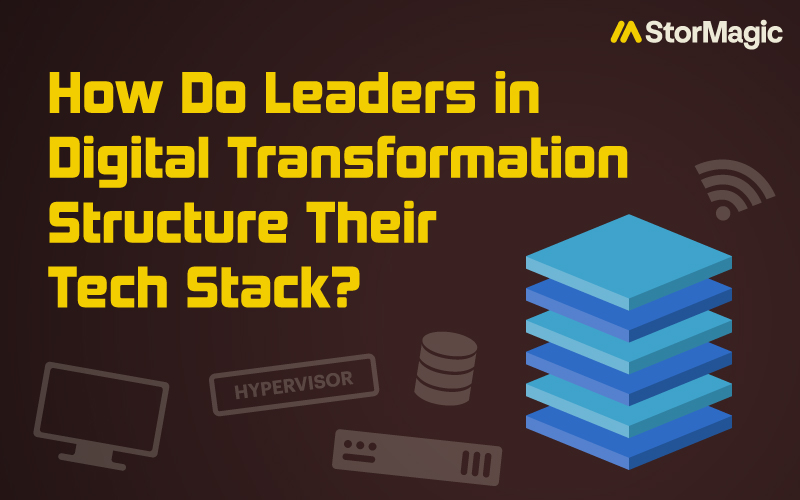
Leaders in digital transformation understand this reality and structure their tech stacks accordingly. Here’s a look at what leaders are focusing on the transform their tech stacks in the coming years.
Focusing on Applications at the Edge
“There’s going to be an explosion of growth in applications of 500 to 1,000 net new production applications at the edge locations alone. This is largely due to AI.”
Paul Nashawaty, Principal Analyst, The Cube Research
It’s predicted that organizations will deploy 500 to 1,000 net new production applications at edge locations alone over the next two years. AI is driving this growth, along with the need to process information where it lives rather than shipping it elsewhere.
However, this explosion creates a problem. Leaders like CIOs are dealing with complexity and skill gap issues as they try to modernize. The tech landscape is changing rapidly, and teams that could handle yesterday’s infrastructure often lack the equipment for what comes next.
Hiring Generalists Over Specialists
“In our latest study, which came out of our App Dev Summit that we just did recently, we found that 67% of organizations are hiring generalists over specialists.”
Paul Nashawaty, Principal Analyst, The Cube Research
67% percent of organizations now hire generalists over specialists. Organizations make this choice not because they prefer generalists or because specialists lack value. Specialists are hard to find, and generalists can now perform the work with the assistance of modern tech stacks and AI.
This hiring trend directly impacts infrastructure decisions. Tech stacks that require highly specialized skills to deploy and manage create bottlenecks. Leaders in digital transformation choose platforms that generalists can operate effectively, reducing dependency on hard-to-find expertise.
Tech Stacks without Vendor Lock-in
Organizations are reassessing their infrastructure options without the lock-in constraints that used to dominate decision-making. Where once businesses had limited options and were locked into certain vendors, there is now greater choice and more flexible solutions available on the market.
Leaders in digital transformation choose solutions that deliver frictionless deployment and management. They seek platforms that generalists can operate without needing a team of specialists. They prioritize tech stacks that support application portability across core, edge, and cloud environments.
This approach proves especially important at the edge, where the application explosion is happening. Edge locations need infrastructure that deploys simply, manages easily, and does not require on-site expertise. When you manage hundreds or thousands of edge sites, complexity does not scale.
Greater Flexibility
Tech stack decisions determine whether your modernization efforts succeed or stall, so leaders prioritize solutions that reduce friction rather than add to it. Remember that the best infrastructure is the kind your team can actually deploy and manage without hiring an army of specialists.
For example, if you’re selecting a new software vendor, capabilities such as a user-friendly interface or 24/7 support services make a significant difference for your internal teams. This is increasingly important as businesses take on new applications, software, and services.
Learn more about these insights in our PodMagic episode, What Real-World IT Teams Want from Infrastructure with Paul Nashawaty.