If your employees are using ChatGPT to write reports, Gemini to summarize meetings, or Claude to debug code, there’s a good chance your IT team doesn’t know about it. That’s shadow AI, and it’s already inside your organization.
What Is Shadow AI?
Shadow AI refers to any artificial intelligence (AI) tool, large language model (LLM), or AI-powered application that employees use without the knowledge or approval of their IT department.
It’s not malicious and most employees don’t have malicious intentions and they aren’t trying to cause problems. They find a tool that saves them an hour a day and start using it. ChatGPT, Gemini, Claude, Microsoft Copilot extensions, AI writing tools, coding assistants, data analyzers.
If this sounds familiar, it should. A decade ago, we called it shadow IT. Employees started using Dropbox, Slack, or Google Drive without telling anyone, and many IT teams spent years cleaning up the compliance and security mess that followed. Most businesses have policies in place to manage these types of shadow IT, and shadow AI has followed suit.
Think about it, most of us have sat in an all-hands where AI is discussed, and in most cases, leadership teams are actively encouraging its use to accelerate innovation within their businesses.
But potentially, the stakes are slightly higher than shadow IT with shadow AI. This is due to the nature of AI.
Why Shadow AI Is More Dangerous Than Shadow IT
With shadow IT, the risk was largely about unauthorized software accessing company systems. Annoying yes, but the risk assessment is typically greater than that of any other known cybersecurity issue.
With shadow AI, employees aren’t just using an unapproved tool, they’re feeding it your data.
Picture this, a team member pasting a client contract into ChatGPT to get a summary, or dropping a financial report into an AI writing tool to clean up the language. That information doesn’t disappear. Many public LLMs use user-submitted data to train their models. That means sensitive business information, customer data, intellectual property, and confidential strategy documents can become part of a model’s training set. Your business data is now in someone else’s model.
Shadow AI Examples to Watch For
Shadow AI isn’t always obvious. Here are common scenarios playing out in organizations right now:
- A sales rep uses an AI tool to draft personalized outreach, pasting in CRM data and customer details
- A developer feeds proprietary code into an AI coding assistant to fix bugs faster
- A finance analyst drops quarterly figures into a public LLM to generate an executive summary
- A marketing team member uses an AI image generator or writing tool that isn’t covered by any company policy
- A contractor, outside your organization, summarizes confidential meeting notes using a free AI transcription tool
None of these feel like security incidents in the moment, which makes the risk difficult to manage. Read our informative blog about how to detect shadow AI here.
What Shadow AI Means for IT and Security Teams
For IT and security professionals, shadow AI creates several overlapping challenges:
Data Leakage
Sensitive data shared with public AI services sits outside your control, your data governance policies, and potentially outside regulatory compliance boundaries.
Compliance Risk
Depending on your industry, allowing uncontrolled AI use may put you in violation of frameworks like ISO, GDPR, HIPAA, or SOC 2. Regulated industries face particularly serious exposure.
Visibility Gaps
You can’t protect what you can’t see. If IT doesn’t know which tools employees are using, you can’t assess the risk, enforce policies, or respond when something goes wrong.
How to Get Shadow AI Under Control
You won’t solve shadow AI by locking everything down. Instead, build a clear AI policy. Define what’s approved, what’s prohibited, and why. Make your AI policy practical, not just a list of rules. And build it with the understanding in mind that AI likely helps, not hinders, your employees.
It could also be useful to audit what tools your teams are actually using, as you may be surprised how widespread the behavior already is. Especially when some teams might be operating entirely in silos, and could even be relying on specific AI tools to do their actual jobs.
What to Do if An AI Tool is a Security Risk
Offer approved alternatives. If employees are turning to shadow AI because your approved toolset doesn’t meet their needs, it might be time to fix that gap, because the goal is to make the right choice the easy choice.
You can also train your teams. Most employees using shadow AI don’t understand the risks, which means they’re not being careless, they’re being efficient. Education changes that, and helps them understand what they might be responsible for if something went wrong.
Lastly, reassess your AI policy regularly. The AI landscape changes faster than most IT policies can keep up, so build in regular reviews so your approach stays relevant.
AI Risks in Edge Environments
In edge and distributed environments, AI can introduce risks related to limited visibility into how decisions are made, incorrect automated actions, poor-quality data, security vulnerabilities, model performance degradation over time, and over-reliance on automation. Because AI-driven decisions can be deployed across many systems simultaneously, errors may be amplified at scale, making strong monitoring, governance, and human oversight important for maintaining reliability and control.
It’s not necessarily end users utilizing different tools, but the tools themselves, that cause risk. AI is still a mostly unchartered territory, and so there’s still room for error.
This is especially true if there’s no manual, human intervention. IT professionals with trained eyes might be able to spot mistakes, while the AI glazes over them. This is why choosing software vendors that offer human support and intervention is still valuable in the age of AI.
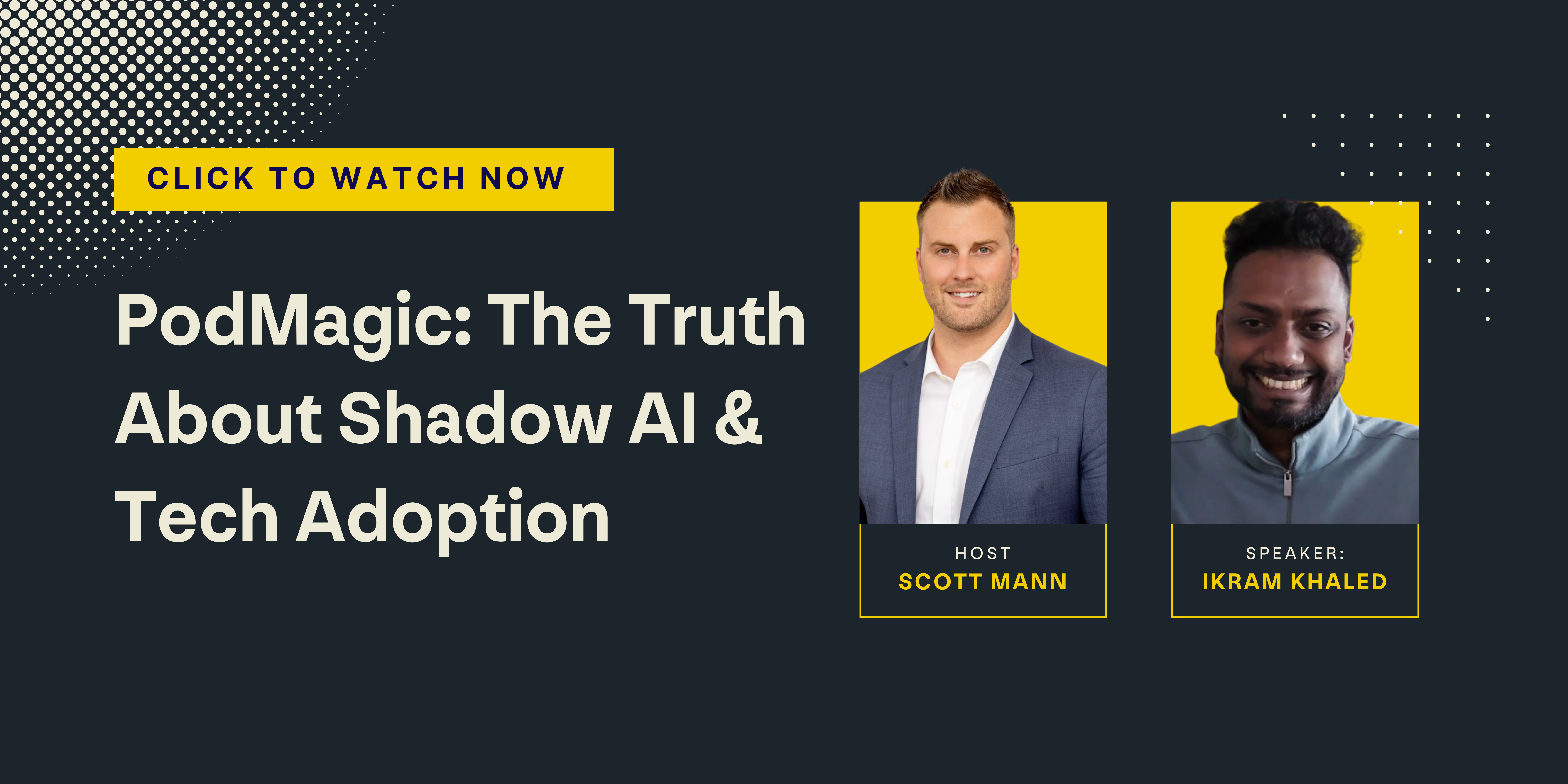
Shadow AI is already inside most organizations. The question isn’t whether it’s happening, it’s whether you know about it. The businesses that get ahead of it now will avoid the data breaches, compliance failures, and reputational damage that come from finding out the hard way. Want to learn more? Watch or listen to PodMagic “The Truth About Shadow AI & Tech Adoption With Ikram Khaled” here. Scott Mann sits down with Ikram Khaled, Group Head of Vendor Alliances at QBS Technology Group, for a candid and practical conversation about the massive shifts redefining the global IT landscape.