Blog

Data Sovereignty vs Data Residency vs Data Localization: What’s the Difference?

Data sovereignty vs data residency vs data localization: three phrases that get used interchangeably, and three questions that aren't actually the same question. Residency asks where data sits. Localization asks what the law requires. Sovereignty asks who's really in control. Mixing them up is how an organization passes a compliance checklist while still failing their desired goal for great [...]
What is Data Sovereignty?

Data sovereignty is the principle that data is subject to the laws and governance of the location where it is stored, processed, and managed, regardless of where the organization that owns the data is based. In some cases, if data sits on a server in a different country, that country's laws, not just the organization's own, can apply to [...]

What is Edge AI?

  Edge AI is artificial intelligence (AI) that runs on hardware close to where data is created, like a store, a factory floor, or a remote site, instead of sending that data to a distant cloud server for processing. The AI model does its thinking locally. That means faster results, less dependence on an internet connection, and tighter [...]

Digital Sovereignty Trends 2026

Digital sovereignty is becoming a practical IT infrastructure consideration, not just a policy discussion. For businesses, it raises important questions about where data lives, who can access it, and how much control they have over the infrastructure that keeps critical applications running. As regulatory requirements, cyber threats, and geopolitical uncertainty, and our unpredictable world continue to shape IT decisions, [...]

What is Distributed IT Infrastructure?

Distributed IT infrastructure spreads compute, storage, and networking across multiple physical or virtual locations instead of housing everything in one central data center. Rather than routing every request back to a single hub, a distributed model processes data closer to where it's created, at branch offices, retail locations, or other sites at the edge. That difference matters as it [...]

How Fast Can You Scale Enterprise Virtualization in 2026?

Managing a VM migration, of any kind, can sometimes come with trade-offs. In an edge environment, the more sites you need to cover, the more complex, longer, and disruptive the rollout can become. But this is no longer the norm. Businesses are using virtualization software as an alternative to vendors like VMware, in order to scale the IT infrastructure they [...]

Edge Infrastructure in an Unpredictable World

This blog was originally published as the executive briefing Edge Infrastructure in an Unpredictable World: What Leaders Gain and Give Up When They Outsource the Enterprise Edge by Susan Odle, CEO, StorMagic. It has been lightly edited for formatting and readability, but the content and perspectives remain unchanged. Download Executive Brief Across retail, manufacturing, energy, healthcare, [...]

The Hardware Questions to Ask Before VMware Migration

You might be planning a VMware migration, or a bigger IT transformation project. However, say your organization operates dozens, maybe hundreds, of remote sites, and at each one sits a server that's still well within its supported lifecycle, still performing exactly as it should, with plenty of useful life left. That single detail, easy to overlook in the middle of [...]

Edge Computing in Manufacturing: Key Trends in 2026

In our most recent PodMagic episode, The Reality of IT/OT Convergence in Manufacturing, host Scott Mann, SVP Global Sales at StorMagic, sat down with Christopher "Chris" Lloyd, Chief Solutions and Technology Officer, SYSPRO. The wide-ranging conversation moved from IT/OT convergence and workload placement through to the true cost of downtime, cybersecurity on the shop floor, and where AI realistically fits [...]

What is Edge Virtualization?

If you run IT for an organization with more than one location, retail stores, bank branches, factories, or utility outstations, you already know the challenge. Every site needs compute, storage, and networking to function, but you can't put a full data center in every location, and you can't send IT staff to fix every problem in person. Edge virtualization [...]

Reducing IT Costs in Hardware Refresh Cycles

A hardware refresh has always been one of the more significant line items in an IT budget, but for most organizations it was at least predictable. You planned a three to five year cycle, provisioned accordingly, and budgeted with reasonable confidence. What's changed recently is that predictability itself has gone away. Market changes mean that, in some cases, quote validity [...]

4 Applications of Edge Computing to Watch

Edge computing is well-established as a core part of enterprise IT. What's changed is the breadth and sophistication of what's now running on it. The IT infrastructure originally adopted to solve latency and uptime problems at individual sites now sits behind some of the most operationally important systems in retail, manufacturing, and beyond. One pattern shows up across nearly every application [...]

What is Shadow AI? With Examples

If your employees are using ChatGPT to write reports, Gemini to summarize meetings, or Claude to debug code, there's a good chance your IT team doesn't know about it. That's shadow AI, and it's already inside your organization. What Is Shadow AI? Shadow AI refers to any artificial intelligence (AI) tool, large language model (LLM), or AI-powered application that employees [...]

How to Detect Shadow AI Before It Becomes Your Biggest IT Problem

Shadow AI is spreading through businesses faster than most IT teams realize. And if you're an managed service provider (MSP), reseller, or channel partner, there's a good chance it's already inside the organizations you support. The question isn't whether your customers are using unsanctioned artificial intelligence (AI) tools. The question is, do they know about it, and do you? [...]

Top Edge Computing Examples for 2026

The number of connected devices worldwide continues to climb. As IoT deployments grow across industries, the traditional model of routing everything through a central cloud is under increasing strain. More devices means more data, more latency, and more points of failure. Edge computing is the answer to that scaling challenge. Processing data locally keeps systems fast, resilient, and manageable, even [...]

What Is Edge Computing in IoT?

Edge computing in relation to the Internet of Things (IoT) means processing data at or near the device that generates it, rather than sending it to a distant cloud or data center. This reduces latency, improves reliability, and allows IoT systems to make real-time decisions without depending on a constant network connection. For example, picture a self-driving car approaching a [...]

Tried This VMware Migration Method? Warm Import Explained

Your VMware migration methods matter, and each approach changes how workloads move, when disruption happens, and how much operational risk IT teams need to manage. If you’re asking what kind of migration approach should I use for my environment, warm import is one of those methods. In environments using StorMagic SvHCI our hyperconverged infrastructure (HCI) software, warm import is a [...]

Minimize VMware Migration Disruption with These Steps

What Is VMware Migration? VMware migration is the process of moving virtual machines (VMs), workloads, and infrastructure services from a VMware environment to another platform or infrastructure architecture. That might sound straightforward, but in practice it often involves moving: Virtual machines running production applications Storage configurations and data dependencies Network configurations and IP mappings Backup and disaster recovery systems [...]

What is IT Modernization? With Examples

IT modernization is the process of migrating from legacy systems to modern IT architecture. It helps businesses improve efficiency, security, and scalability by adopting new technologies, automating processes, and integrating solutions that are compatible with today’s demands, like artificial intelligence (AI). By replacing outdated infrastructure with modern solutions, organizations can reduce operational costs, improve system reliability, and respond faster [...]

Multi-Site IT Modernization Made Simple

Managing IT infrastructure across dozens or hundreds of remote locations isn't just complex, it's getting more expensive and harder to justify with outdated systems. If you're responsible for edge infrastructure modernization across places like retail stores, manufacturing plants, branch offices, or oil rigs, you're dealing with a challenge that traditional centralized IT strategies weren't built to handle. The reality is [...]

Hardware Lifecycle Management: Extend Your IT Investment in Uncertain Times

Have you struggled with rising hardware costs lately? You're not alone. Between chip shortages, tariff uncertainty, and the Broadcom-VMware licensing shake-up, IT teams are rethinking everything they thought they knew about hardware lifecycle management. On April 1, 2026, StorMagic hosted a roundtable discussion titled "The Modern Refresh: How to Make Your Hardware Lifecycle Live Longer." Industry experts gathered to [...]

IT Modernization Market Trends 2026

The biggest risk of the IT modernization process isn't choosing the wrong technology, it's doing nothing at all. Factors like rising costs, vendor lock-in, changing industry landscapes create complexity that compounds with every new remote site. If you're managing edge infrastructure across distributed locations, you're dealing with more than just the day-to-day of keeping the lights on. You’re likely experiencing [...]

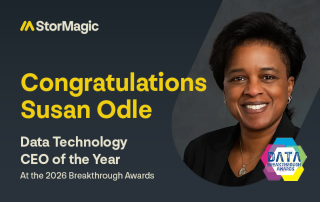
Susan Odle Named Data Technology CEO of the Year

Susan Odle, CEO of StorMagic, has been named "Data Technology CEO of the Year" at the 2026 Data Breakthrough Awards. This recognition validates her exceptional leadership of StorMagic and champions our smart, simple, and flexible virtualization solutions. About The Data Breakthrough Awards The Data Breakthrough Awards program sets the gold standard for excellence in the data landscape, recognizing the companies, [...]

What Is Technology Change Management?

Technology change management, also known as IT change enablement, is an important concept within a business IT transformation strategy. It’s the process of managing change to ensure that IT services, processes, and people can transition to new technology smoothly, with minimal disruption and risk.  Importantly, technology change management best practices exist to support faster, more frequent changes. This is key [...]

IT Capacity Management and IT Transformation

Managing IT infrastructure transformation is hard enough without running out of runway halfway through. Vendor licensing changes, rising costs, and sprawling distributed environments when managing edge IT, can make the modernization journey feel like a monumental project. When you’re moving to new systems, software, or applications, it can be hard to plan for what you think you might need, [...]

6 Steps to Modernizing IT Infrastructure

IT infrastructure modernization is essential to keep apace with ever-changing business needs and new technology, but it can feel overwhelming. Especially in edge computing environments, where changes can be complex.  Whether you're managing a handful of edge sites or dozens of remote locations, the same core steps apply. You don’t need to modernize everything overnight. You just need to [...]

Migrating Workloads: Top Struggles and How to Overcome Them

Workload migration involves moving applications, data, and IT between physical servers, virtual machines (VMs), or different on-premises infrastructure environments. For the purposes of this blog, this context is distinct from cloud migration, which moves workloads to public or private cloud platforms.  For businesses with edge environments that also want to modernize their infrastructure, the process of workload migration means moving [...]

Hardware Refresh Cycles: Reduce Costs & Extend Lifespans

Hardware refresh cycles shouldn't overwhelm your IT strategy. And yet many organizations find themselves locked into expensive 3-to-5 year replacement schedules, replacing parts of their functional IT infrastructure simply because "that's when refreshes happen." But there are a few ways to extend the lifespan of your hardware and reduce costs over time, too. And now, due to rising memory [...]

Q&A With Our New Global SVP of Sales, Scott Mann

It’s such an exciting time at StorMagic. We’re entering our next phase of growth, which means expanding our leadership team with an experienced virtualization industry leader who brings deep expertise in global sales, channel strategy, and scaling software businesses.  Our new Global SVP of Sales, Scott Mann, is here to share more about his background, what drew him to StorMagic, [...]

Edge, AI, and IT Infrastructure in 2026

In our recent blog, we shared that application modernization sits at the top of every CIO's priority list, and for good reason. But modernization is not a one-time project. It's a constantly moving one, and the decisions organizations make in 2026 will determine whether they keep pace or fall behind. Here’s what we believe will drive decision-making in the [...]

Will Containers Replace VMs?

Organizations face a critical decision when it comes to application modernization. They need to determine whether they're going to refactor (restructure) their applications, move towards more containerization, leverage their existing ecosystem and infrastructure, or move to a different one entirely. The path forward is not as straightforward as simply replacing VMs with containers. Let's explore the most common changes impacting [...]

Understanding the Future of Memory and Storage

A massive change is happening in the hardware industry, and you need to know about it. Micron, one of the key three manufacturers of memory and storage globally, announced its consumer business exit, and now sells exclusively to industry, with a heavy focus on the AI market. This comes as manufacturers shift production to the high-bandwidth memory needed for AI [...]

How Do Leaders in Digital Transformation Structure Their Tech Stack?

Application modernization is the top priority for CIOs, driving every infrastructure decision made today. However, digital transformation and modernization present a persistent challenge. Organizations need to continuously evolve applications between core, edge, and cloud, depending on where they develop them, how they develop them, and what tech stack makes sense for each location. Leaders in digital transformation understand this [...]

What is End-user Computing?

Every day, employees across the globe log into their devices, access applications, and get work done. Behind this seamless experience sits a complex ecosystem of technology that IT teams manage around the clock. This ecosystem is end-user computing. End-user computing (EUC) is the collection of technologies IT professionals use to deploy, manage, and secure the devices, applications, and data that [...]
AI Storage Solutions: Trends and Predictions

Managing your organization's data just got smarter. AI storage solutions are transforming how we handle, protect, and recover information, and the shift is happening faster than you might think. The artificial intelligence (AI) market is growing fast, and 71% of businesses have accelerated AI adoption due to various factors, and it seems that AI is a relatively safe bet in [...]

What is AI Storage?

It’s no secret that the AI market is booming. Organizations are investing billions each year in AI projects across every industry and use case, and the AI industry itself is projected to increase in value by around 9x by 2033.  But it’s data that makes it all possible. AI engines require massive amounts of data storage to produce effective models, learn, [...]

Understanding Hypervisor Market Share: Trends and Top Vendors

The last few years have seen the hypervisor market enter a period of change. What started as Broadcom's acquisition of VMware in late 2023 has become a catalyst for the most significant shift in enterprise virtualization technology in over a decade. Today, IT leaders face a reality where the perpetual VMware licenses are gone, replaced by subscription models and [...]

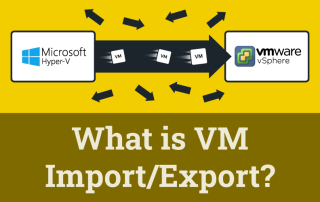
What is VM Import/Export?

Managing VM import processes? We’ve been there. Whether you're migrating workloads, consolidating infrastructure, or preparing for platform changes, understanding VM import and export is essential. We’ve put together this blog to explain what goes into the process and key things you should consider before getting started. Defining VM Import and Export VM import and export enable the movement of [...]

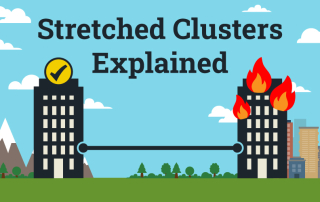
Stretched Clusters Explained: What is a Stretch Cluster?

Stretched clusters, also known as stretch clusters or metro clusters, are a computing configuration that spreads virtualized infrastructure across two or more physically separate locations, like data centers or buildings. If one site fails, the other site can take over to ensure continuous operation, enabling real-time failover capabilities. This setup provides enhanced availability and redundancy, enabling organizations to better prepare for [...]

Retail IT Infrastructure That Just Works: Lessons from Giant Tiger

Retail IT has never been more mission-critical, and it’s never been more complex. In a recent PodMagic episode, Bruce Kornfeld from StorMagic sat down with Paul Wood, former CEO of Giant Tiger, to talk about the realities of retail technology leadership. Paul helped Giant Tiger grow from 100 to more than 250 stores across Canada. That kind of expansion brought big [...]

Lessons Learned From Building a Homelab: The Good, the Bad, and the Brilliant Mistakes

Building a homelab begins with equal parts excitement and ambition. Every freshly unpacked homelab server feels like a ticket to a personal datacenter sandbox; visions of pristine dashboards and automated builds dance in your head. Reality arrives quickly. What you plan to learn often gets overshadowed by what surprises you: a finicky NIC, a hidden power brownout, or an undocumented [...]

What is a Hypervisor? A Beginner’s Guide

Software-defined storage (SDS) is a form of storage virtualization. It significantly improves the simplicity and flexibility of data storage management by introducing a software layer, independent from the physical storage hardware (i.e. disks and SSDs).

Building and Monitoring a Homelab with StorMagic

A homelab is more than just a place to tinker. It's where IT professionals build real-world skills, test new ideas, and simulate infrastructure challenges in a safe, flexible environment. Whether you're exploring virtualization, learning how to manage data storage, or preparing for edge deployments, a homelab is one of the most valuable tools you can have.In this guide, we'll walk [...]

What’s New in Our Cloud-based Management Tool for Edge IT? Edge Control 1.4.0

StorMagic Edge Control is a cloud-based fleet management tool for edge environments. It makes it easier for organizations managing IT across distributed, remote locations. From a handful of sites to thousands of edge locations, it simplifies your fleet management and helps your teams stay focused on what matters most. With the latest update, Edge Control 1.4, we've taken this further, [...]

What Is a Homelab and Why Is It Important?

For many IT professionals, the homelab is where curiosity turns into capability. It’s a place to test ideas, troubleshoot new technologies, and build confidence before putting those skills into production. While it might start with a repurposed desktop and a few virtual machines, a homelab can evolve into a powerful simulation environment that mirrors the infrastructure challenges and projects found [...]

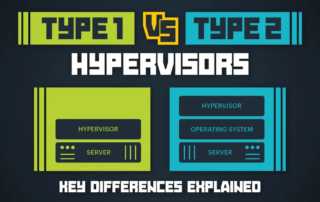
Type 1 vs Type 2 Hypervisors: Key Differences Explained

In a quiet room, an IT administrator launches a dozen virtual machines (VMs) on a screen. There are no towers or cables in sight, just virtualization, where all physical machines are within a virtual environment, as opposed to a physical one. At the center of it all lies the hypervisor. A piece of software that enables a physical computer to [...]

What is a VM Snapshot?

A VM snapshot is a copy of a virtual machine (VM) at a specific point in time (PIT). It captures the VM's data and state, including its memory, disk, and power. This enables administrators to perform a data rollback and revert to the previous state of the VM. VM snapshots are widely used in server virtualization to: Facilitate backup Manage rapid data [...]

Inside Our New Global Partner Program: Redefining Partner Success

When you partner with a vendor like StorMagic, your success becomes our success. Because that’s how a great channel partner program is supposed to work! We believe that a partner program should do more than just check boxes. As a partner, it should empower you to grow revenue, reduce risk, and build new, long-term customer relationships. That’s why we’ve completely [...]

Should You Stay or Should You Go? VMware Migration

Should I stay, or should I go now? Should I stay, or should I go now? If I go, there will be trouble And if I stay, it will be double So come on and let me know… Many organizations are considering a move away from VMware, but some hesitate after hearing the numbers. Gartner reports that migrating 2,000 or [...]

Installing StorMagic SvSAN Plugin: A First-hand Experience

Welcome to the first installment of our new first-hand experience blog series. Our new Technical Marketing Manager, Dennis Smith, will guide you through a first-hand product installation of SvSAN. If you’re not familiar with StorMagic SvSAN, it’s a lightweight, cost-effective virtual SAN designed specifically for edge computing and small data center environments. It eliminates the need for physical SANs by [...]

Are There Realistic Alternatives to VMware?

Broadcom’s overhaul of VMware’s licensing model marked a shift in the hyperconverged infrastructure landscape. Before the late 2023 announcement, the vendor served as a steady and reliable provider for countless IT infrastructures, but many businesses are now looking for alternatives to VMware thanks to changing licensing and the introduction of subscription-based plans. The new model encourages businesses into multi-year contracts, [...]

VMware Licensing Changes: The 3-year Lock-in and More

This article has been updated for 2026 to reflect the latest developments in Broadcom's VMware licensing transformation. The Broadcom overhaul of its VMware licensing structure signaled a major transformation in how businesses procure and manage VMware solutions. The move, which swept away the familiar comfort of a perpetual license and replaced it with a subscription-based model, wasn’t just a [...]

Unlocking Low-risk and Lower TCO with VMware Alternatives

Broadcom’s acquisition of VMware has reshaped today’s hyperconverged infrastructure (HCI) market, pushing businesses to reconsider their reliance on VMware's HCI software due to concerns around pricing, support, and product direction. With the HCI market estimated to grow at a CAGR of 23.5% from 2024 to 2030, it's no surprise that VMware alternatives are rapidly gaining traction. As organizations seek greater [...]

Agent-based Backup in Action Using Veeam with StorMagic SvHCI

When it comes to data backup, there are several options available, including tape, external hard drives, and cloud-based storage solutions. However, these methods often have limitations, such as limited scalability and flexibility, high costs, and inadequate data protection. In contrast, agent-based backups offer a robust and cost-effective solution that has gained a wide adoption in recent years. Agent-based backup works [...]

Why Build Your Own Hyperconverged Infrastructure Solution?

Hyperconverged Infrastructure (HCI) combines computing, networking, and storage resources into a single datacenter architecture. What is a Hyperconverged Infrastructure Solution? This software-driven model eliminates dedicated hardware by creating flexible storage across multiple nodes. Each node runs a virtualization layer that consolidates and distributes resources throughout the cluster, forming a unified storage system. Software-defined networking (SDN) and load-balancing tools optimize request [...]
The Importance of High Availability Servers

High availability servers play a critical role in ensuring continuous operation, minimizing downtime, and preventing disruptions that could impact your business performance and day-to-day operations. By implementing high availability infrastructure with redundancy, fault tolerance, and failover mechanisms built-in, you can maintain performance even in the face of unexpected failures. Let’s explore the importance of high availability infrastructure to minimize unexpected [...]
High Availability Architecture and Best Practices

An Overview of High Availability Architecture and Best Practices High Availability (HA) architecture ensures systems, applications, and services remain operational and accessible, even during hardware failures, software glitches, or unexpected disasters. This is achieved by distributing applications across the nodes in a cluster. Enterprises, particularly those operating in edge environments like retail or manufacturing, depend on high availability to maintain [...]
How a TCO Strategy Unlocks Cost Efficiency in Enterprise IT

When your organization considers a new IT investment, you’ll likely focus on upfront costs. A lower sticker price can be an easy win, especially when trying to reduce spending. However, experienced decision-makers know the true cost of technology extends far beyond the initial purchase. That’s why a renewed focus on total cost of ownership (TCO) can provide the framework to [...]
Hyperconverged Infrastructure and The Opportunity for Enterprise IT Strategies

In sometimes not-so-quiet management meetings, amid discussions of future forecasts and budgets, today’s IT leadership faces a puzzling issue. There’s a growing demand for more scalable, cost-efficient solutions across their IT strategy. And it’s a constant challenge to balance cost, reliability and performance. For some IT teams, the path forward seems clear. Focus on a cloud-first strategy and reap the [...]
High Availability Cluster: Key Concepts You Need to Know

High availability (HA) clusters ensure that business applications and services stay online, even during unexpected failures. Also known as failover clusters, these systems help maintain continuous operation and minimize downtime by seamlessly handling hardware or software disruptions. Here’s an inside look at how HA clusters work, why they’re essential, and what you need to consider when implementing them. What is [...]